Mind map

Questions:-
- What is the “brain” of the computer?
- What does RAM stand for?
- What happens to a computer if it doesn’t have enough RAM?
- What is the difference between RAM and Storage?
- What are 3 external devices that a PC connects to?
1 =) The base of operations for the brains of a computer is the motherboard. The computer brain is a microprocessor called the central processing unit (CPU). The CPU is a chip containing millions of tiny transistors.
2 =) Random access memory.
3 =) The computer still needs to run those programs, but doesn’t have the space to do it. So what the machine does is it creates Virtual Memory. This is Disk Space that the computer will now try to use in place of RAM. Problem with that is the machine cant use Virtual memory very well because Disks have to load everything, making it slow down the machine very much.
4 =) THE DIFFERENCE BETWEEN MEMORY AND STORAGE. People often confuse the terms memory and storage, especially when describing the amount they have of each. The term memory refers to the amount of RAM installed in the computer, whereas the term storage refers to the capacity of the computer’s hard disk.
5 =) There are many examples to it but some of them are – Mouse ,Keyboard ,Hard disk, Printer.
SCENARIOS:–
Motherboard:
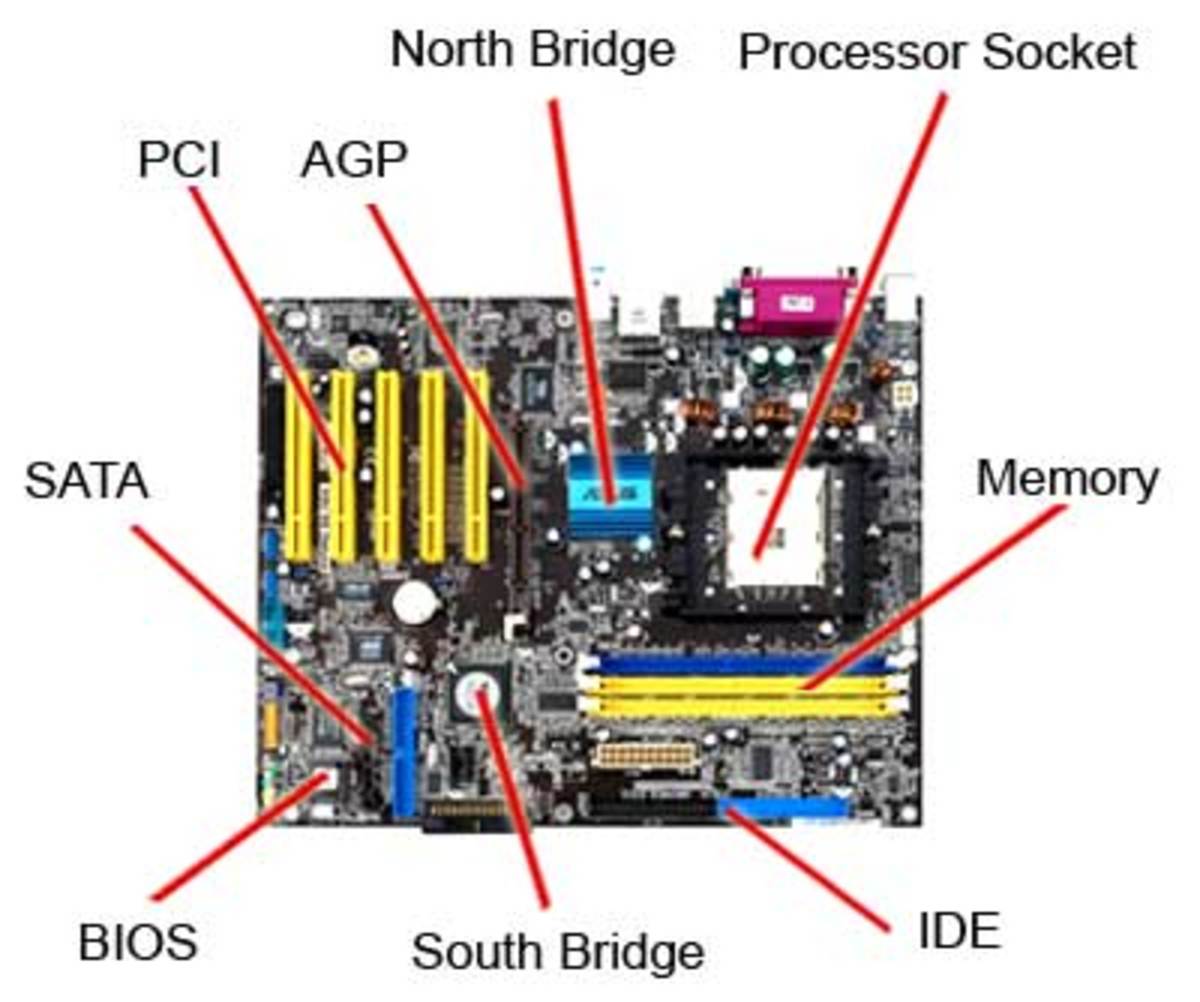
- What does SATA do?
- What are PCI slots for?
- What goes in the processor socket?
- What does IDE do?
- What does BIOS stand for?
- What does BIOS do?
1 =) Serial ATA (Serial Advanced Technology Attachment or SATA) is a standard for connecting and transferring data from hard disk drives (HDDs) to computer systems. As its name implies, SATA is based on serial signaling technology, unlike Integrated Drive Electronics (IDE) hard drives that use parallel signaling.
2 =) A Peripheral Component Interconnect (PCI) slot is a connecting apparatus for a 32-bit computer bus. These tools are built into the motherboards of computers and devices in order to allow for the addition of PCI devices like modems, network hardware or sound and video cards.
3 =) The processor socket (also called a CPU socket) is the connector on the motherboard that houses a CPU and forms the electrical interface and contact with the CPU. Processor sockets use a pin grid array (PGA) where pins on the underside of the processor connect to holes in the processor socket.
4 =) An integrated development environment (IDE) is a software application that provides comprehensive facilities to computer programmers for software development. An IDE normally consists of a source code editor, build automation tools, and a debugger. Most modern IDEs have intelligent code completion.
5 =) BIOS stands for Basic Input Output System.
6 =) BIOS (basic input/output system) is the program a personal computer’s microprocessor uses to get the computer system started after you turn it on. It also manages data flow between the computer’s operating system and attached devices such as the hard disk, video adapter, keyboard, mouse and printer.
 anmol2004.home.blog